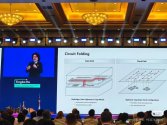
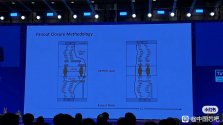
What does Kirin 2026 translate to in terms of node performance? ( I am assuming simple transistor density can't be compared because of stacking)
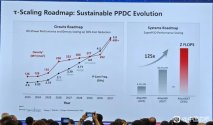

What does Kirin 2026 translate to in terms of node performance? ( I am assuming simple transistor density can't be compared because of stacking)
Kirin 2026 TSMC N3P level density? would be interesting to see
Kirin 2026 TSMC N3P level density? would be interesting to see
note the big increase in year 2030. I think this is the timeline for EUV.Kirin 2026 TSMC N3P level density? would be interesting to see
EUV has to happen a few years before takeover for this roadmap to pan out because convergence doesn’t just require EUV but that Huawei is matching TSMC performance at the takeover point, which by 2030 should be when TSMC is reaching a 1 nm process node. Just getting EUV doesn’t automatically vault Huawei to a 1nm equivalent performance.note the big increase in year 2030. I think this is the timeline for EUV.
Promo video of SiCarrier from when it debuted. (Delete if it's a post)
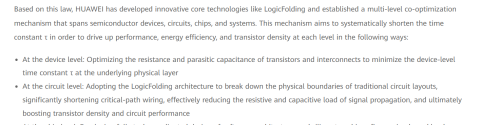
Yes but it’s about more than just co-optimization. Sounds like they’re also proposing different optimization heuristics for die layout design and transistor architecture. On die transistor density itself may be deprecated from being the primary priority in design iterations. In a hypothetical sense if they can get to equivalent frequency of operations with a lower density on die design at equivalent energy budget as a higher density on die design that would be considered equivalent performance based on their tau scaling principles.View attachment 175519
They are going to co-optimize from the transistor level to system level. That means they are going all in process optimization, new materials and tools. ALD of new materials, Epitaxial materials, ALE, implantation and so on. Maybe is were all those SiCarrier tools are going in.