
You are using an out of date browser. It may not display this or other websites correctly.
You should upgrade or use an alternative browser.
You should upgrade or use an alternative browser.
Miscellaneous News
- Thread starter bd popeye
- Start date


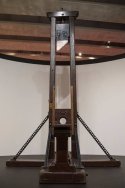
My second job will be starting a factory that makes these things.


Still waiting don't tread on me folk to grow a spine and show the world US is not meme country!!
Don’t tread on me folks love perpetrating said atrocities against minorities and people they don’t like.View attachment 172843
Still waiting don't tread on me folk to grow a spine and show the world US is not meme country!!

The Islamic Republic of Iran is apparently not the only country ran by "religious extremists."
From yesterday's White House Easter luncheon:
According to the female speaker in the — multimillionaire televangelist Paula White-Cain — not only is Donald J. Trump president "because of God," but moreover:
Don't know whether God is on the side of President Trump and America or Supreme Leader Khamenei and Iran, but I can tell you men who believe they were divinely chosen for a higher purpose aren't usually the most rational decision makers!
From yesterday's White House Easter luncheon:
According to the female speaker in the — multimillionaire televangelist Paula White-Cain — not only is Donald J. Trump president "because of God," but moreover:
President Trump has decided to rededicate this nation on May 17th to you, oh Lord. So we invoke your name, your power, your mercy, your grace.
Don't know whether God is on the side of President Trump and America or Supreme Leader Khamenei and Iran, but I can tell you men who believe they were divinely chosen for a higher purpose aren't usually the most rational decision makers!
antiterror13
Brigadier
nobody cares anymore of what tariff Trump saying, zero credibility

Lethe
Captain
Few U.S. experts are as respected in South Korea as James Laney, former U.S. ambassador to the country. Laney first went to Korea in 1947 as an army intelligence officer and returned in 1959 as a Methodist missionary. Two of his three daughters were born in the country, which was recovering from the devastating Korean War. After serving as president of Emory University for 16 years, Laney served as the U.S. ambassador in Seoul from 1993 to 1997, playing an important role in diffusing the North Korean nuclear crisis in 1994. Yonsei University, one of South Korea’s most prestigious universities, a James Laney chair professorship as well as a James Laney lecture series, which features the most prominent minds in U.S.- Korea relations.
So it was no small news when the 98-year-old former ambassador offered a blunt assessment of the current state of the South Korea-U.S. alliance on March 5, as he received the 2026 Building Bridges Award from the Pacific Century Institute (where I am a board member). In an event usually filled with fluffy grace notes, Laney’s prerecorded remarks offered a cold-eyed analysis that left the audience—which included former South Korean President Moon Jae-in—stunned:
“The [United States] has unilaterally turned the bridge [of the U.S.-Korea alliance] into a drawbridge, with controls only on the United States side. Even when the bridge is down, the gates, that is, tariffs, are controlled by Washington, and the entire edifice operates at the whim of a United States president.
“It grieves me to say it. Boy, I never thought I would have to say it. But I think Korea must begin to project its future on its own terms. Of course, it will do so wisely and prudently, but its interests are no longer congruent with those of the White House.
“What this means for troop command, independent nuclear capability and relations with China will require political skill and deftness of extraordinary range. … [U.S. President Donald] Trump has made it abundantly clear that the [United States] is solely concerned with its own interest. Anything else is for the gullible.”
Laney verbalized what many Korea analysts have been thinking but were too afraid to say: the U.S.-South Korea alliance is close to rupturing, and Washington is at fault. Thanks to the Trump administration’s actions, Seoul must reconsider the fundamental building blocks of the alliance, including U.S. troop presence in South Korea, a nuclear umbrella instead of its own nuclear armament, and participation in U.S. deterrence of China.
Apologies if there is a more appropriate thread for this topic that I missed.
Last edited:

Washington notified Tokyo of the postponement of delivering approximately 400 Tomahawk missiles to it, which was scheduled by March 2028.


Not sure if such a device would ever get a chance to be used in all honesty. Current generation are too afraid to resort to the old ways to restore order in a nation gone mad
What an extraordinary poor sales man if they keep on delaying what they are selling to their customers by many years and also why do they both telling the world this information as though they are proud of this. Don't they know that China is salivating at the chance for some long over due pay back. I am not sure why the USA fails to consider the basics in not letting the world know of their blunders although to be fair most of its intelligent staff have either retired or died already, leaving only the sub standard ones left behind to well drag the nation down under
Last edited: