
You are using an out of date browser. It may not display this or other websites correctly.
You should upgrade or use an alternative browser.
You should upgrade or use an alternative browser.
China's Space Program Thread II
- Thread starter Blitzo
- Start date

BTW do we have any solid specs on YF-215 yet? Last I've seen is 200tf and 25MPa chamber pressure which is... underwhelming at best. It seems only comparable to Raptor 1 which is far obsolete and replaced not only by Raptor 2 but even that is already being replaced by Raptor 3 now.-Out there option: The FFSC YF-215 engine, we know (from the presentation up above on the page) that CALT was looking at using a ⌀7m RLV as some kind of verification for the YF-215 before its application on CZ-9; but so far there hasn't been any hint of infrastructure/tooling work on such ⌀7m RLV, while there has been for the CZ-9. Maybe it's possible they instead decided to test it on a CZ-10-series launcher, in theory they should be able to fit 7 of them in such a LV, giving it >50% higher thrust compared to CZ-10B, with significantly higher isp... However that would mean that such launcher is probably a few years away from launch.
By LM-9's first flight in 2032, it's likely going to be several iteration behind US counterpart if not generations if these specs are real.
AFAIK This is the chronologically latest info about YF-215 from official sources from august.BTW do we have any solid specs on YF-215 yet? Last I've seen is 200tf and 25MPa chamber pressure which is... underwhelming at best. It seems only comparable to Raptor 1 which is far obsolete and replaced not only by Raptor 2 but even that is already being replaced by Raptor 3 now.
By LM-9's first flight in 2032, it's likely going to be several iteration behind US counterpart if not generations if these specs are real.
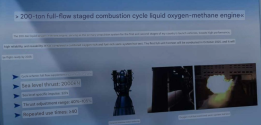
assuming a typical expansion ratio, 327s isp at sea level likely mean a chamber pressure in the 20-30 MPa range.
As for Raptor 1... it wasn't really a flight worthy engine. We'll see how it goes, afaik Landspace directly aims for Raptor 2 performances for their Blue Flame engine.
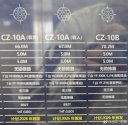
Also in your post above, we can see that Cargo CZ-10A is planned for 2028, so I guess Tianzhou launches on CZ-10A have been moved forward from 2032 to 2028. Or maybe it'll be used for some other use (Lanyue docking test in LEO? A bit late for that. Commercial cargo spacecrafts? Probably not, the point of commercial cargo is that they can be launched on non-crew rated launchers...)
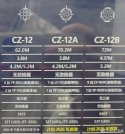
Also from the same source we can see that CZ-12B has a LEO payload of 23t (in expendable mode), the YF-102R (mispelled as LY-102R) engine thrust is also 92t so I guess that's likely the "90-ton reusable liquid oxygen-kerosene engine" that was tested in 2024 ()
Overall a respectable performance, with optimisation and maritime landing enabling optimal recovery trajectories I could see it matching the Falcon 9's reusable performances.
Last edited:
Raw performance isn't everything. Reliability and good program management count just as much. The Starship program is rife with sloppy quality control and lapses in competent systems engineering. They've taken a 'test as you fly' mentality to excess, and it shows in the number of explosions and other failures they continue to have. They're awash with cash for now though, so these deficits might be overcome via brute forcing their way through. I wouldn't bet on it, though, considering their past performance.BTW do we have any solid specs on YF-215 yet? Last I've seen is 200tf and 25MPa chamber pressure which is... underwhelming at best. It seems only comparable to Raptor 1 which is far obsolete and replaced not only by Raptor 2 but even that is already being replaced by Raptor 3 now.
By LM-9's first flight in 2032, it's likely going to be several iteration behind US counterpart if not generations if these specs are real.
Seems like cope, this really reads like when western analysts are saying "China cannot sustain the investment/subsidy, they'll collapse soon!". Despite inadequacies, SpaceX is still far ahead of all Chinese launch providers combined in launch mass per year while having reasonable if not great record with Falcon 9s. They are also ahead on the actual technology used as well with domestic alternatives far behind, especially with rocket engines. Despite all the bashing here, Starlink remains the only operational megaconstellation that provides global connectivity at high speeds while Guowang and Qianfan remains nowhere close in scale and isn't even publicly operational and likely won't be for a while.Raw performance't everything. Reliability and good program management count just as much. The Starship program is rife with sloppy quality control and lapses in competent systems engineering. They've taken a 'test as you fly' mentality to excess, and it shows in the number of explosions and other failures they continue to have. They're awash with cash for now though, so these deficits might be overcome via brute forcing their way through. I wouldn't bet on it, though, considering their past performance.
F9 still remains the most launched rocket with sortie records broken every year while Chinese providers haven't demonstrated a single reusable rocket yet and even with the ones that are about to take flight, actual performance is still no where close to the current F9 whether that is due to technology limitation or reusing manned design that are not optimised for cargo, it doesn't objectively change that China is far behind on orbital capacity.
Falcon 9 and Starlink are outstanding, I won't dispute that. I was talking about Starship specifically, and even then I caveated that they might be able to brute force their way to success, despite their clear issues. To me Spacex of today isn't the same as the Spacex of circa 2016. A lot of the talent has left, and they're coasting on the legacy and achievement of Falcon 9.
I also won't dispute that China is behind in terms of creating a Falcon 9 equivalent, as well as producing something Starship-esque. There's reason to think that will change in the coming years, however. And they also have the advantage of not having mercurial (putting it mildly) leaders at the helm.
I also won't dispute that China is behind in terms of creating a Falcon 9 equivalent, as well as producing something Starship-esque. There's reason to think that will change in the coming years, however. And they also have the advantage of not having mercurial (putting it mildly) leaders at the helm.
This is a thread for Chinese space program, please leave SpaceX/US out of it, there is dedicated thread for worshipping them. Don't see the necessity of always bringing in SpaceX when talking about good or bad about Chinese engines.BTW do we have any solid specs on YF-215 yet? Last I've seen is 200tf and 25MPa chamber pressure which is... underwhelming at best. It seems only comparable to Raptor 1 which is far obsolete and replaced not only by Raptor 2 but even that is already being replaced by Raptor 3 now.
By LM-9's first flight in 2032, it's likely going to be several iteration behind US counterpart if not generations if these specs are real.
Besides, CZ-9 is a 3 stage rocket from the onset and will remain so, 2 stage version of it is a byproduct, Starship is a 2 stage rocket, never a 3 stage one. You are comparing apple with orange again.
Not sure what CZ-9's design has to do with how advanced YF215 is? I don't think it's unfair to compare it to a competitor's product in a similar class designed to do a similar purpose. Fact is if the specs are true then YF215 is objectively a worse engine than Raptor 3 or even Raptor 2 despite coming out years later.This is a thread for Chinese space program, please leave SpaceX/US out of it, there is dedicated thread for worshipping them. Don't see the necessity of always bringing in SpaceX when talking about good or bad about Chinese engines.
Besides, CZ-9 is a 3 stage rocket from the onset and will remain so, 2 stage version of it is a byproduct, Starship is a 2 stage rocket, never a 3 stage one. You are comparing apple with orange again.
No space program or country exists in a vacuum, ignoring competition is not going to make Chinese launch vehicle technology magically superior.

Why so obsess with SpaceX? If Chinese rockets can launch all the satellites China wants, why care what SpaceX does or doesn’t have?Not sure what CZ-9's design has to do with how advanced YF215 is? I don't think it's unfair to compare it to a competitor's product in a similar class designed to do a similar purpose. Fact is if the specs are true then YF215 is objectively a worse engine than Raptor 3 or even Raptor 2 despite coming out years later.
No space program or country exists in a vacuum, ignoring competition is not going to make Chinese launch vehicle technology magically superior.
The Raptor engine was planned as early as 2009, and it was not until 2014 that it switched from hydrogen-oxygen propulsion to methane propulsion. Its initial version had a thrust of 160–170 tons. It gradually evolved from there.Not sure what CZ-9's design has to do with how advanced YF215 is? I don't think it's unfair to compare it to a competitor's product in a similar class designed to do a similar purpose. Fact is if the specs are true then YF215 is objectively a worse engine than Raptor 3 or even Raptor 2 despite coming out years later.
No space program or country exists in a vacuum, ignoring competition is not going to make Chinese launch vehicle technology magically superior.
YF215 was discussed in literature as early as 2005 and has always been a 200-ton methane engine. In fact, its initial target vehicle was not a vertical takeoff and vertical landing (VTVL) reusable rocket, but an enlarged follow-up version of the AT-1 (a winged rocket, VTHL reuse). The specifications of this 200-ton methane engine have remained unchanged (as is typical for government projects—they do not arbitrarily adjust parameters like private companies do, because you don’t understand the technology). Remember one thing: when God closes a door, he opens a window. For truly complex propulsion systems, there are numerous metrics—hundreds of evaluation criteria to meet. The Raptor engine you see excels in only a few metrics, but no one knows how it performs in others. In fact, it’s just like the Starship rocket’s metric system—if you fully understand the capabilities and metrics of a launch system, you’ll find that many of Starship’s metrics are downright terrible. It could be considered one of the worst designs in history, yet this nearly worst heavy-lift rocket in history does not prevent it from being world-leading in areas like payload capacity, launch mass, and maximum thrust. (PS: I mean, if Raptor 1-3 were to go through the national certification process of the RS-25/SSME, it would 100% fail—many metrics were simply abandoned.)
Finally, let me add that China currently has seven methane engines of 200 tons or more under development, with the largest designed thrust being 300 tons. And just recently, Blue Arrow Aerospace’s 220-ton methane engine completed a full long-duration test. What you perceive as China’s lag in rocket engine technology is simply because the projects entered actual development and testing later. Raptor reached its current state through 10 years of aggressive iteration (technology verification began around 2015–2016), while China’s 200-ton-plus methane engines only entered real development after 2020.
What does it matter if rocket engines are a few years behind? Currently, the U.S. only has 2–3 teams capable of developing 200-ton-plus liquid rocket engines, and its ability to develop heavy hydrogen-oxygen and kerosene engines is nearly lost.
China now has seven teams working on 200-ton-plus liquid oxygen-methane engines alone, and there are several more teams working on heavy hydrogen-oxygen and heavy kerosene engines. Smaller engines below 200 tons aren’t even worth mentioning.
I don’t know what you’re so proud of. Doubts about SpaceX’s aggressive approach among professional aerospace experts in the U.S. are already becoming very apparent.
One more thing: China’s nuclear thermal propulsion has already begun detailed design and simulation of mechanical issues for installation on the third stage of rockets, though it will be at least 10–15 years before it’s actually installed on a rocket (the plan has always been around 2040, for the Long March 9 Phase 3). Where is SpaceX’s reserve in this type of propulsion? And where are the high-thrust nuclear electric propulsion systems for deep space? The U.S. playing commercial aerospace against China’s national aerospace team is actually quite amusing.
The Long March 9’s first-stage launch thrust has always been locked at 6,000 tons (launch mass locked at around 4,000 tons). In fact, this specification has existed for over a decade. Why is this the case? Because what you’re seeing is basically the CZ-9 Phase 1—Phase 1 is locked into achieving its designated goal (LEO 100 tons). It doesn’t overthink anything else. But China also has plans for LEO 200 tons, which have existed for a long time.
It’s just that this plan originally aimed for 100 tons of expendable payload capacity, and the new upgrade is for 100 tons of reusable payload capacity. What’s the rush?
PS: For Starship to achieve a reusable LEO capacity of 100 tons, it requires a liftoff thrust of over 8,000 tons and a liftoff mass of 5,500 tons. In contrast, the CZ-9 plan aims for a liftoff thrust of 6,000 tons and a liftoff mass of 4,400 tons to achieve the same payload target.