
You are using an out of date browser. It may not display this or other websites correctly.
You should upgrade or use an alternative browser.
You should upgrade or use an alternative browser.
Indian Military News, Reports, Data, etc.
- Thread starter bd popeye
- Start date

I don’t think it is any conspiracy from the U.S. end. It’s due to some issue with the supply chain most likely.Getting back to those engineless Tejas, any reliable info why did the americans delayed the delivery of the engines? Is it just a blackmail tactic to force the indians to do something the americans want them to, or is it something else, or both?
Indian mainstream journalists still doing J20 vs Rafale comparisons

...someone illustrated that j-20 left handed and blindfolded! is it some rinky dink manipulative ploy? could be the illustrator is a statseed and is attempting to manifest his hopes and dreams? either way the infographic is amusing to look at!
Indian mainstream journalists still doing J20 vs Rafale comparisons
"There are two different philosophies of modern air dominance and survivability: being difficult to see or being harder to target. The US (Lockheed Martin) and China have chosen the first. Europe has mastered the second."
Man, I wonder what the fuss regarding Tempest/GCAP/FCAS/AMCA is all about...
Last edited:

...someone illustrated that j-20 left handed and blindfolded! is it some rinky dink manipulative ploy? could be the illustrator is a statseed and is attempting to manifest his hopes and dreams? either way the infographic is amusing to look at!
"There are two different philosophies of modern air dominance and survivability: being difficult to see or being harder to target. The US (Lockheed Martin) and China have chosen the first. Europe has mastered the second."
Man, I wonder what all the fuss regarding Tempest/GCAP/FCAS/AMCA is all about...
They did a whole program on it yesterday - Rafale wins against J20 due to supposedly superior avionics and SPECTRA lol

I know dissing academia is a popular thing amongst guys like MAGA.Description from the link makes me think he is very "hyperbolic":
"
Often downplayed or misrepresented, the short but intense military confrontation between India and Pakistan in early May 2025 was one of the sharpest clashes the two nuclear-armed rivals have fought in decades. Lasting less than four days, the conflict saw the combat debut of several of the most advanced weapon systems currently in service. Widely dismissed in much of the international media as a mere extension of the Kashmir dispute, a “large-scale cross-border skirmish,” or simply a “drone battle,” it culminated in both sides claiming victory—before being shepherded into a ceasefire through hurried diplomatic pressure from the administration of U.S. President Donald Trump. Yet behind these narratives lies a confrontation that will shape Indo-Pakistani relations for decades to come.
The crisis began on 22 April 2025, when a terrorist attack outside Pahalgam in Indian-administered Jammu and Kashmir killed 26 civilians, mostly Hindu tourists. A Pakistan-based, UN-designated terrorist organisation first claimed responsibility, then denied involvement, while Islamabad—having engineered the attack to draw global attention to Kashmir—dismissed the massacre as an Indian “false flag operation.” New Delhi responded with a series of calibrated countermeasures and, armed with irrefutable evidence of Pakistani complicity, launched precision strikes on multiple terrorist camps in the early hours of 7 May.
Determined to dictate India’s responses through nuclear threats and long-standing myths of military invulnerability, Pakistan escalated. Mortars, artillery rockets and armed unmanned aerial vehicles were fired at civilian, military and religious targets inside Indian territory. India, however, reacted with a tightly planned and proportionate operation that systematically dismantled Pakistani air defences. Over the next 48 hours, Pakistan intensified its “drone war,” only to see the majority of its systems destroyed mid-flight.
In desperation, Islamabad ordered ballistic missile strikes on 26 targets across India. New Delhi’s retaliation was swift and overwhelming. In just 90 minutes, Indian missiles crippled key Pakistani command centres, closed runways at several major PAF bases, destroyed critical aircraft hangars, and—most significantly—struck at least one, possibly two underground nuclear weapons storage sites. The message was unmistakable: India now held the upper hand.
Though rooted in the long-standing Kashmir dispute, the India–Pakistan War of May 2025 represented something far more consequential. For the first time in 80 years of hostility, India not only responded directly to a Pakistan-sponsored terrorist attack, but openly called Islamabad’s nuclear bluff, neutralised its ability to retaliate and forced Pakistani aircraft away from the international border—placing the IAF in a decisive offensive posture. Despite Islamabad’s subsequent efforts, aided by Chinese disinformation and familiar Western misconceptions, to mask the scale of its defeat and even claim victory, the strategic balance between the two nations has been irrevocably altered.
Richly illustrated with custom-drawn diagrams, detailed colour profiles and in-depth technical analysis, 88-Hours War provides the first full account of this fast-moving but poorly understood conflict. Combining background, context and a blow-by-blow narrative of the fighting from 7 to 10 May 2025, it is an indispensable reference for defence professionals, analysts and military history enthusiasts alike."
But when guys like this are supposed to be reputable scholars, it makes some think, maybe those guys had a point.
It reminds me of the Indian "scholar" who coined debt trap diplomacy and yet had a meltdown when Trump turned against India. You figured someone who was in this field would be aware that this thing is expected to happen.
Last edited:

"There are two different philosophies of modern air dominance and survivability: being difficult to see or being harder to target. The US (Lockheed Martin) and China have chosen the first. Europe has mastered the second."
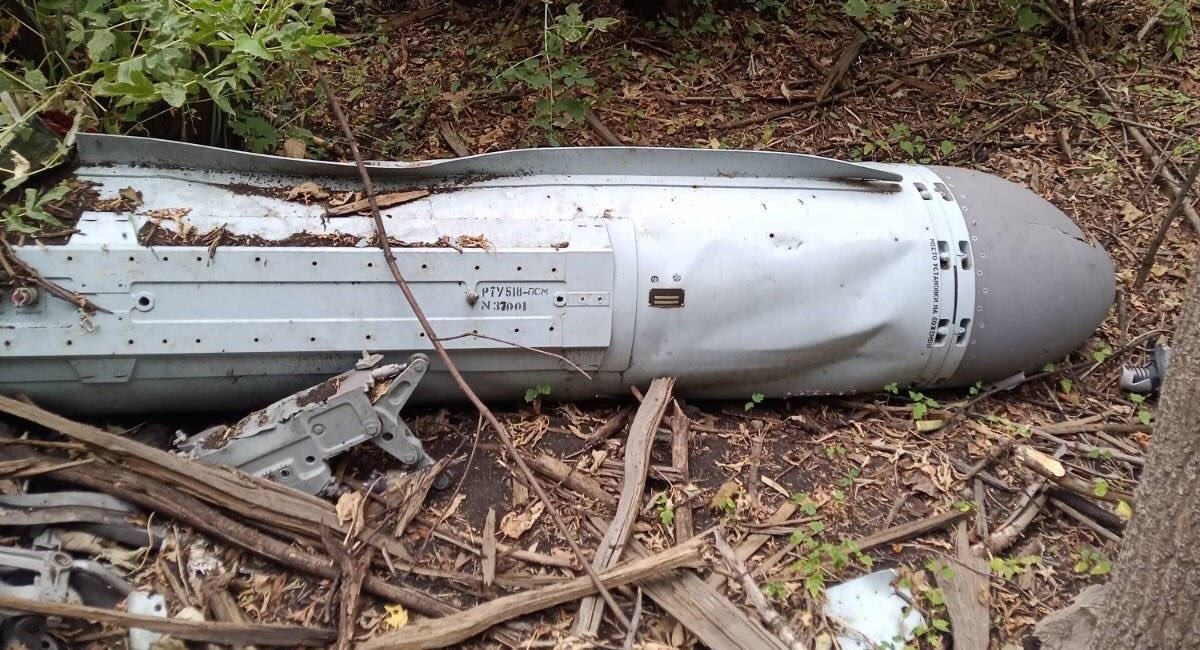

L-175 pod from Su-35s in Ukraine.What is this?
Idea that you fit full self-escort jamming on every plane if you're too poor for escort jamming isn't limited to EU, it's European /geographically/. I.e. Eurocanards+Russia.
Turns out, no, you need stealth for first day action. EW is very conditional defense. Indians of course thought that problem is Russia - and got Rafale down.