
You are using an out of date browser. It may not display this or other websites correctly.
You should upgrade or use an alternative browser.
You should upgrade or use an alternative browser.
Chinese UCAV/CCA/flying wing drones (ISR, A2A, A2G)
- Thread starter VESSEL
- Start date
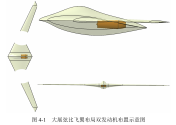


The youngest paper here is nearly 9 years old, doesn't seem likely to be directly related.

View attachment 168480
The youngest paper here is nearly 9 years old, doesn't seem likely to be directly related.
The youngest paper being nearly 9 years old (and oldest being 13 years old) would actually somewhat correlate to doing pre-research and development on principles and technologies that would feed into something like WZ-X or GJ-X, given the timescale in which these sort of projects emerge in, and given WZ-X and GJ-X aren't actually that exotic. They're big, unmanned flying wings yes, but the technologies they're using have likely been demonstrated quite a while ago but they're just applied on a larger scale and on an unmanned platform is all.
That some of them relate a high aspect ratio flying wing with twin engines, and if they are indeed for a mach 0.5-0.65 and 18-20km platform, that would be very close to what we expect WZ-X to be and operate at.
That isn't to say these papers are relate one to one to WZ-X, but I would be very surprised if some of them weren't part of the workup for the project that WZ-X was developed to meet.
@Tomboy Maybe, but the similarity is uncanny. Obviously it takes years from this stage of research to prototype, on the other hand we don't really know when WZ-X first flew, could be somewhat older than we think.
Assuming WZ-X first flew in 2024-2025, it would be entirely reasonable for the papers to be the age that they are (chances are much of the actual research was done well before the years they were actually published).
The lag time between pre-research done and then actually being implemented in a flying prototype (especially if it's an EMD prototype) can very much be quite a long time.
View attachment 168480
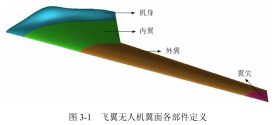
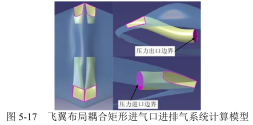
The youngest paper here is nearly 9 years old, doesn't seem likely to be directly related.
Assuming WZ-X first flew in 2024-2025, it would be entirely reasonable for the papers to be the age that they are (chances are much of the actual research was done well before the years they were actually published).
The lag time between pre-research done and then actually being implemented in a flying prototype (especially if it's an EMD prototype) can very much be quite a long time.
I'd also add that given the size of the WZ-X that we've seen on satellite imagery (i.e. with the wingspan of the B-2), the team(s) responsible certainly would have played around with smaller-sized, physical technological demonstrators/prototypes to test, evaluate, and validate all the principles and operations of such aircraft before moving on to something as massive as the WZ-X.
If anything, it is very much reasonable to expect that these physical demonstrators/prototypes to come out after or along the aforementioned academic papers as part of and/or extension of their research efforts into the unmanned flying wing technology before the higher-ups smack their hands on the table and say, "Yes, go ahead and build the WZ-X".
Last edited:
Given the date on these paper, and the advancement of Chinese industry in the years in between. It would be disingenuous to claim any of the designs shown are directly related to WZ-X or that WZ-X's detailed internal and external design will be the same or similar.I'd also add that given the size of the WZ-X that we've seen on satellite imagery (i.e. with the wingspan of the B-2), the team(s) responsible certainly would have played around with smaller-sized, physical technological demonstrators/prototypes to test, evaluate, and validate all the principles and operations of such aircraft before moving on to something as massive as the WZ-X.
If anything, it is very much reasonable to expect that these demonstrators/prototypes to come out after or along the aforementioned academic papers as part of and/or extension of their research efforts into the unmanned flying wing technology before the higher-ups smack their hands on the table and say, "Yes, go ahead and build the WZ-X".
Notice how I said "directly" instead of saying they are completely unrelated. As they obvious help build technical competency and the experience could be applied to a variety of recon drones that we've seen.
Given the date on these paper, and the advancement of Chinese industry in the years in between. It would be disingenuous to claim any of the designs shown are directly related to WZ-X or that WZ-X's detailed internal and external design will be the same or similar.
Notice how I said "directly" instead of saying they are completely unrelated. As they obvious help build technical competency and the experience could be applied to a variety of recon drones that we've seen.
I think it's more fair to say that they are "likely related" rather than saying that they are "not directly related". There should be more weight placed on the extent of relation between this research and the final product, rather than the opposite.
That is important because I think it helps us to appreciate that the date of the papers correspond quite well to the sort of pre-research that one would have to do to feed into a project like WZ-X, which is not only large but also unmanned (and thus naturally will have a degree more conservatism compared to a high end manned project given the added complexities that an unmanned platform brings).
If anything the date in which these papers were published, and the time in which this stage of research likely would have been done (perhaps as early as early to mid 2010s, before publishing some years later respectively), is exactly where we'd expect something like a large unmanned platform of 2024-2025 to be built up from.
Given the secrecy and role of WZ-X I suspect we will not get direct papers on its actual specific design studies any time soon (if ever) -- but research like this fits the right timespan given the level of work they're actually doing.
Given the date on these paper, and the advancement of Chinese industry in the years in between. It would be disingenuous to claim any of the designs shown are directly related to WZ-X or that WZ-X's detailed internal and external design will be the same or similar.
Notice how I said "directly" instead of saying they are completely unrelated. As they obvious help build technical competency and the experience could be applied to a variety of recon drones that we've seen.
I would second @Blitzo here.
And "... the advancement of Chinese industry in the years in between..." does not mean that Chinese engineers won't require consiserable amount of time to figure out and settle down on everything needed for building and operating such a massive unmanned flying wing aircraft. This is especially true for China's case, given how she has neither the capability nor the experience in designing, building, and operating full-scale flying-wing aircraft until the last 20+ years (unlike the US, which already began efforts in this domain all the way back in the 1970s).
If anything, the development efforts on technologies of similar scale and complexity often take many years, if not decades. You think that the work on the J-20 only started in the 2000s? No, it started way back in the early 1990s, if not in the late 1980s. The same goes for the J-36 and J-XDS/50 - The work started back in the early 2010s, if not in the late 2000s.
That's (partially) what those papers are for - In fact, I would go further and say that at least a couple of those papers are part-and-parcel of the whole process (as it is normal for many other military development projects in China), at the very least to a certain degree.
Last edited: