Passive aggressive 100As though cities in the West are not full of CCTVs.
Too little too late? The Xiamen-Kinmen Bridge is already under construction.
Passive aggressive 100As though cities in the West are not full of CCTVs.
Too little too late? The Xiamen-Kinmen Bridge is already under construction.
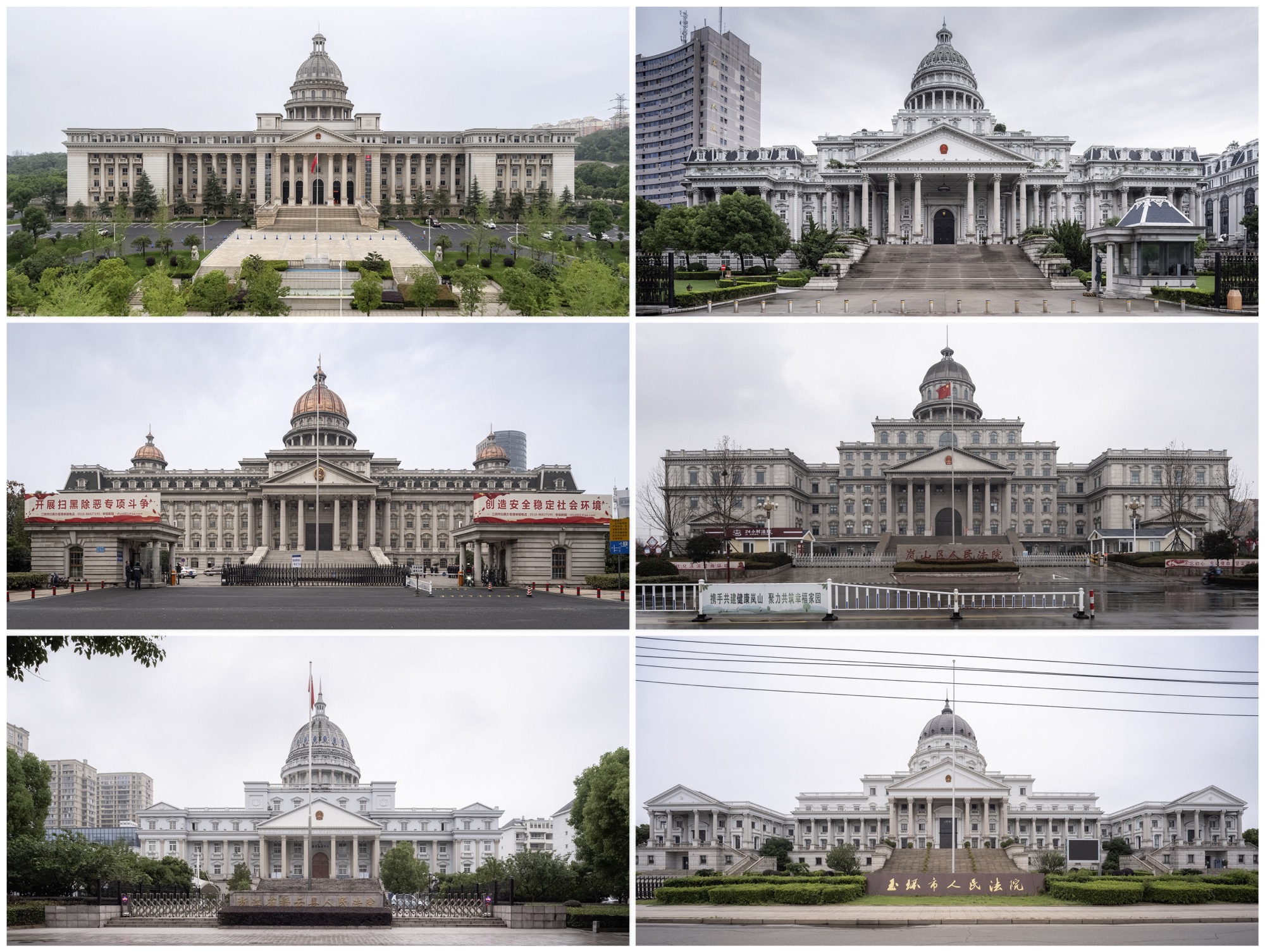
This is like the 5th post in this thread supporting the destruction of buildings for no reason other than architectural style. We should also blow up the Leshan Giant Buddha Taliban-style since it represents the excesses of an Indian cult.Yeah some guy on Xiaohongshu told me China should keep the western architecture in the country as tourism so people could "experince" european charm while keeping money in the country. I swear people like to create an illusion of western charm in the country and it's embarrassing. I guess this is why people like that still exist.
Waste of money. Should also destroy Mao's tomb for copying the Lincoln Memorial and doing the bare minimum (yellow roof) to make it look Chinese.These are our statues of Stalin. If we don't pull them down, some might say it's because we are less vindictive than the eastern Europeans, but the colonial apologists will use it say we "benefited" from colonialism and that despite those grand buildings being literally built on a massacre of local Chinese villages, it was still "worth it".
Ironically alot of western technology was built upon technology created by the Arabs and Chinese etc. Afterall Algebra and Algorithims are Arabic words and the father of NASA was a Chinese guy who later became the father of China's rockets. Not to mention a bunch of advanced technology from Mesoamerica that were destroyed by the Spanish.Then we should also destroyed all the technology that come from the west and then come back to Qing era lol.
China has criticized the United States for providing a stage for Taiwan's separatist forces at the U.S.-held Pax Silica Summit and condmned Taiwan's Democratic Progressive Party authorities for undermining the island's competitive industries. Chinese mainland spokesperson Peng Qing'en made the remarks at a news conference held by the State Council Taiwan Affairs Office in Beijing.
Washington has unveiled Pax Silica, its so-called flagship AI and security initiative, bringing together key allies from Asia, Europe and the Middle East. Framed as a "positive-sum partnership" that promotes global coordination, the name itself suggests peace through silicon. But is Pax Silica really about cooperation, or is it another attempt to redraw tech supply chains and contain China? What's behind the carefully chosen allies, and who's left out?
US Rare Earth Buyers Still See China Curbs Despite Trump Deal
China continues to restrict rare earth elements needed by the US for domestic production of permanent magnets and other products, despite an October agreement between President Donald Trump and Chinese President Xi Jinping that was meant to lift such restrictions.
According to a report from Bloomberg, citing more than a dozen consumers, producers, government officials and trade experts, while China has increased deliveries of finished products, primarily permanent magnets, the US industry still cannot acquire the raw materials needed to manufacture these items domestically.
The ongoing supply limitations highlight persistent tensions in US-China relations following the October 30 truce reached in South Korea, where the US agreed to cut tariffs and China pledged to restore rare earth supplies. At that time, Trump characterized the agreement as the "de facto removal" of various Chinese restrictions.
By limiting deliveries of raw materials, China is effectively hindering US efforts to establish its own processing industry for rare earths, which are critical components in products ranging from consumer electronics to missile guidance systems. The Trump administration has prioritized developing domestic production capacity for permanent magnets and other rare earth products to reduce dependence on China, which has established a global monopoly in the sector over many years.
The sources discussing these ongoing restrictions asked not to be identified as they were speaking about matters that aren’t public.

China continues to restrict rare earth elements needed by the US for domestic production of permanent magnets and other products