True. Very few are genuine private companies anyway. Most are just branches of state owned space behemoths . Apart from a few like galactic energy, Landspace etc who have more private involvement but even so the state still has some roles in them. It’s the Chinese systemCommercial divisions of SOE - in the overwhelming majority.

You are using an out of date browser. It may not display this or other websites correctly.
You should upgrade or use an alternative browser.
You should upgrade or use an alternative browser.
China's Space Program Thread II
- Thread starter Blitzo
- Start date

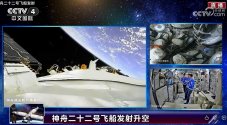
Obviously not. Why else would they launch 22?will shenzhou 21 plan to return with the crew 21?
The crew of Shenzhou 20 has already landed using the Shenzhou 21 spacecraft. The Shenzhou 22 spacecraft will be used for Crew 21's return, and the Shenzhou 20 Spacecraft will presumably be returning to earth unmanned in the coming days/weeks.will shenzhou 21 plan to return with the crew 21?

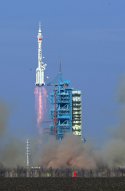
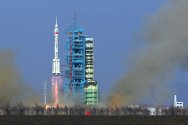
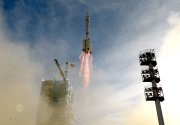
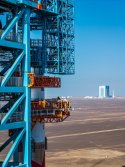
To be absolutely clear to everyone, in Chinese talking in media and government the subject is always "商业航天"/Commercial Aerospace, there was never the subject of 私人航天/Private Aerospace. Any talking of aerospace business and industry in China that specifies the word "private" is pointless at the least, it is like asking for orange in a grape yard.True. Very few are genuine private companies anyway. Most are just branches of state owned space behemoths . Apart from a few like galactic energy, Landspace etc who have more private involvement but even so the state still has some roles in them. It’s the Chinese system
Westerners equate private to commercial, while China's policy is always commercial that does not favor or discriminate any player meaning commercial =/= private. People should stick to the literal meaning of the word "commercial" instead of conflating it.
Good news: CMSA is still planning Shenzhou 23, 24 (ex-22 & 23); Tianzhou 10 and Mengzhou 1 next year
It seems the emergency launch of Shenzhou 22 isn't significantly changing the 2026 planning; There will still be the One year long stay of an astronaut on SZ-23 (ex-22) to accomodate the Pakistani astronaut on SZ-24 (ex-23)
The actual launch date isn't known but it's unlikely there will be more than a one month delay.
Zheng Wei, from the China Aerospace Science and Technology Corporation, explained that repairing a piece of glass from the outside is extremely difficult. He couldn't remove the glass because that would be too risky; the only option was to repair it from the inside, building upon the existing structure. From a manned perspective, we can't guarantee 100% safety, so we won't use it for manned return missions. However, it can still be used for cargo return missions. For this mission, we've implemented reinforcement measures to further ensure safety. Our research and development team is quite confident in our ability to safely return cargo.
SZ-20 is still rated for cargo return.
Shenzhou 20 will be inspected in an EVA, it will likely not reenter for some weeks.Zhou Jianping, Chief Designer of China's Manned Space Program: On November 4th, during a porthole inspection, astronauts discovered a localized anomaly on the porthole edge. Initial photos were taken with a camera, but the astronauts then used a 40x microscope on the space station to photograph the defect from different angles. We consulted glass experts who confirmed a small triangular area with a crack.
The area suspected to have been impacted by space debris was the outermost layer of heat-insulating glass in the porthole. During reentry, the spacecraft will experience intense friction with the atmosphere, generating temperatures exceeding 1000 degrees Celsius. If the glass's heat-insulating effect is compromised, the astronauts' safety may be compromised. Simulation analysis, testing, and safety assessment of the Shenzhou-20 manned spacecraft were rapidly initiated.
Zheng Wei, China Aerospace Science and Technology Corporation: Because it is heat-insulating glass, the focus is mainly on its heat-insulating performance and whether it can withstand the ablation process during reentry. Based on simulations, we used the porthole of the return capsule to simulate the damage state and conducted wind tunnel ablation tests. The test results show that the crack will still propagate further.
Zhou Jianping: We convened a review meeting, and everyone agreed that given the damaged glass, ensuring the safe return of the astronauts posed a significant risk. Therefore, the General Command decided that the Shenzhou-20 spacecraft would no longer be used for the Shenzhou-20 astronaut crew's return.
Zhou Jianping: We had two emergency launch plans, one for 8.5 days and the other for 16 days. The 8.5-day plan was for situations where an emergency occurred in space requiring the astronauts to be brought back as quickly as possible. Currently, the space station is in excellent condition, and the astronauts are residing there, ensuring a very high level of safety. Therefore, we decided to adopt the 16-day emergency plan. Next, the Shenzhou-21 astronauts will conduct an extravehicular activity (EVA) to inspect the Shenzhou-20 spacecraft's windows from outside the spacecraft. Afterwards, the Shenzhou-20 spacecraft will be systematically re-entered Earth with cargo to conduct a more detailed study and analysis of the damaged area.
[...]
Zheng Wei: Actually, when we originally designed the emergency plan, there was no payload loading component; it was omitted to save time and launch quickly. This time, because of the 16-day timeframe, we had time to prepare the payloads, and we worked overtime to load them. The amount of supplies and payloads sent this time was more than before.